
6 min read
On this page
The short answer
A car that won't start is not always a car that is finished. Whether to fix it or sell it depends on what is wrong and what the car is worth, so find out the cause before you decide. If it turns out not to be worth fixing, you can sell a non-running car in Las Vegas: the buyer's tow driver comes to the car, so it does not have to start or be moved.
In the order you will do them:
- Notice what the car does when you turn the key. Clicking, silence, a slow crank, or a crank that doesn't catch each point somewhere different.
- Run the free checks. Gear shifter, key fob battery, fuel gauge, battery connections.
- Get a written diagnosis if it still won't start. Guessing costs more than a diagnostic.
- Compare the repair quote with what the car is worth. Our fix-or-sell guide for engine and transmission failure shows how.
- If you sell, answer the quote's starts-and-drives question as the car really behaves.
What your car is telling you
AAA's guide to 14 reasons a car won't start is a good map. Here are the common patterns, in AAA's terms.
- Clicking, or nothing at all, when you turn the key. AAA lists this as the sign of a dead or dying battery. It suggests a jump-start, and if the car then starts, a replacement soon. AAA also warns never to jump a swollen battery. Clicking can also come from a loose or dirty connection, so look at the battery terminals first.
- A slow crank, or the lights on with a single click or no turnover. AAA ties this to a faulty starter, and says a starter needs a dealership or repair shop.
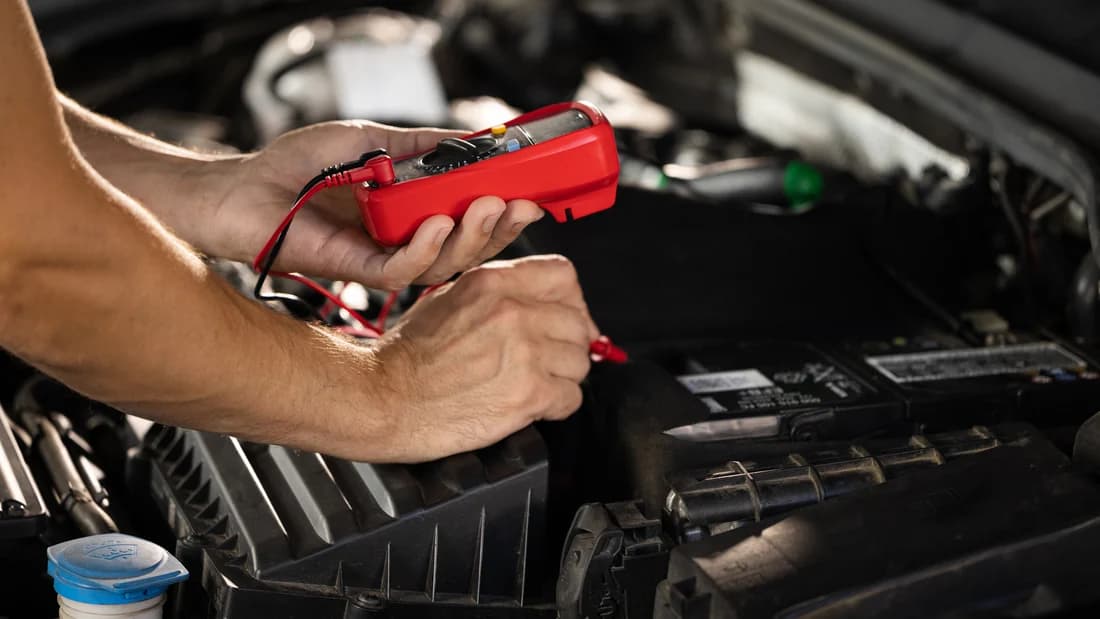
- Dim or flickering lights, or a battery that keeps dying. AAA lists a failed alternator. It suggests a multimeter test but recommends a professional.
- The engine cranks but won't start. AAA points to the fuel system: a clogged fuel filter or a failed fuel pump relay (no faint hum from the fuel pump when the key is turned to On). Check the fuel gauge before anything else, because an empty tank is on the list too.
- No cranking and no clicking. Check that the shifter is fully in Park, or try Neutral. AAA lists a faulty neutral safety switch if that doesn't help.
- The key won't turn or the steering wheel won't move. AAA lists an engaged steering lock and a jammed ignition switch. Jiggle the wheel while turning the key, don't force it, and try a spare key.
- Nothing happens when you press the start button, or you see "key not detected". AAA lists a dead key fob battery. Use the hidden manual key if the fob has one, or replace the fob battery.
- A ticking or rattling noise, then no turnover. AAA lists a worn timing belt and says to stop turning the key repeatedly, because it can cause severe engine damage. That one needs a tow to a shop right away.
AAA says to call a professional or arrange a tow for a suspected starter, alternator, ignition switch, timing belt or fuel filter problem, and to call for help at once for a swollen battery.
Why batteries fail early in Las Vegas
AAA says three factors affect battery life: time, heat and vibration. Its guidance is that a battery lasts three to five years, may last five years or longer in cooler northern climates, and will "typically last approximately three years" in hot southern areas. Heat increases the rate of battery degradation.
So a battery that dies at about three years in the Las Vegas heat is not a surprise, and it is the cheapest cause on the list. AAA also advises having a battery tested every year once it reaches its third year, and checking that its cable connections are clean and tight. If the battery is the only thing wrong with an otherwise sound car, replacing it may be all you need to do.
Fix it or sell it?
A simple way to decide:
- Try the cheap causes first. A dead battery, loose terminals, a fob battery, an empty tank or a shifter not in Park cost little to rule out.
- For anything bigger, get a written diagnosis and quote. Ask what is wrong, what the repair costs, and whether anything else is likely to fail soon.
- Compare the quote with what the car is worth running. Our guide to what decides your car's value explains the factors, and the blown engine or bad transmission guide walks through the comparison.
- Count your time and the tow. AAA recommends a tow for several of the bigger causes, so a repair means getting the car to a shop and waiting for it.
- Sell as it is when the repair does not make sense. An old, high-mileage car with other problems is often easier to sell than to fix.
Our guide to what a junkyard pays shows what to expect for an older car.
How to answer the starts-and-drives question
The quote asks "Does it start and drive?" and the answer shapes both the offer and the tow truck that is sent. Our buyer network has a list of how to answer common situations. These are the ones that come up most with a car that won't start:
- Answer "won't start" for a car that needs a jump-start, starts but shuts off or stalls, has a failed starter or alternator, a failed fuel pump, is out of gas, has a broken timing or serpentine belt, or has a blown engine or engine knock.
- Answer "starts but doesn't drive" for transmission trouble, trouble shifting into gear, limp mode, brakes that don't work, an engine that is smoking or overheating, an oil or coolant leak, or engine misfires.
- Answer "starts and drives" even with a check engine light on, a missing muffler, or a failed smog test.
Two practical points. First, if you answer that the car starts and an image inspection is requested, the buyer network asks for a photo of the instrument cluster with the RPMs above zero: turn the car on, press the gas a little if the RPMs read zero, and photograph the dashboard. Second, if you are unsure which answer fits, choose the less favorable one and describe the problem. An answer that doesn't match what the driver finds can change the offer at pickup, which costs you more time than a lower number up front.
Missing keys are a separate question, covered in our guide to selling a car with no keys in Las Vegas.
Selling a non-running car in Las Vegas
- The truck comes to the car. Our buyer network says its carriers can pick up vehicles that do not run, have a dead battery or cannot be driven, and you do not need to drive or move the car.
- Tell the carrier where it is. If the car is in a garage, a backyard or a narrow driveway, say so in advance so they can check whether their truck fits.
- Have the title ready. The signed title in your name is what completes the sale. If it is missing, our guide to who buys cars without a title in Las Vegas covers the options.
- We buy only cars you own outright. If you still owe on the car, pay it off first.
Sell your non-running car
We handle the title transfer at no cost, the tow is free, you pick a pickup time from the windows offered when you accept, and you're paid at pickup. You get a firm offer online, and our how your offer is built page lists what can change it. Our cash for junk cars Las Vegas quote takes about two minutes.
Common questions
- Can you sell a car that won't start in Las Vegas?
- Yes. Our buyer network says its carriers can pick up vehicles that do not run, have a dead battery or cannot be driven, and you do not need to move the car to meet the truck. Answer the condition questions accurately so the carrier brings the right equipment.
- How do you sell a car that doesn't run?
- Describe the car honestly in the quote, including whether it starts and drives, then book a pickup. The tow is free, you pick a time from the windows offered when you accept, and you are paid at pickup. We buy only cars you own outright.
- Can you sell a broken car?
- Yes, a car in any condition can get an offer, as long as you own it outright and you answer the condition questions as the car really is. A car that does not match your answers can have its offer updated.
- How do I tell a dead battery from a bad starter?
- AAA lists clicking or silence when you turn the key as the sign of a dead or dying battery, and a single click with the lights on, or no engine turnover, as a sign of a faulty starter. A shop can test the battery and charging system to be sure.
- Does a dead battery change my offer?
- It can. Our buyer network says a key or working fob and a working battery, without needing a jump, will get you a higher offer. A dead battery counts as a no, whether or not it can be jumped.
- Should I jump-start the car before I sell it?
- You can try it. AAA says to try a jump-start for a dead battery, but never to jump a swollen battery. For the quote, our buyer network counts a car that needs a jump as not starting, so answer it that way even if a jump gets it going.
- What do I do with a car that doesn't run?
- Find out what is wrong, get a written diagnosis if a free check doesn't fix it, and compare the repair with what the car is worth. If it is not worth fixing, a firm offer with a free tow is a fast way to sell it.
- Can you trade in a car that doesn't run?
- Some dealers may take a non-running trade-in and reduce the value by the repair cost, so ask the dealer. Selling it separately gives you a firm number before anyone comes out.